

.jpg)
English Version | 1001 and other things to do
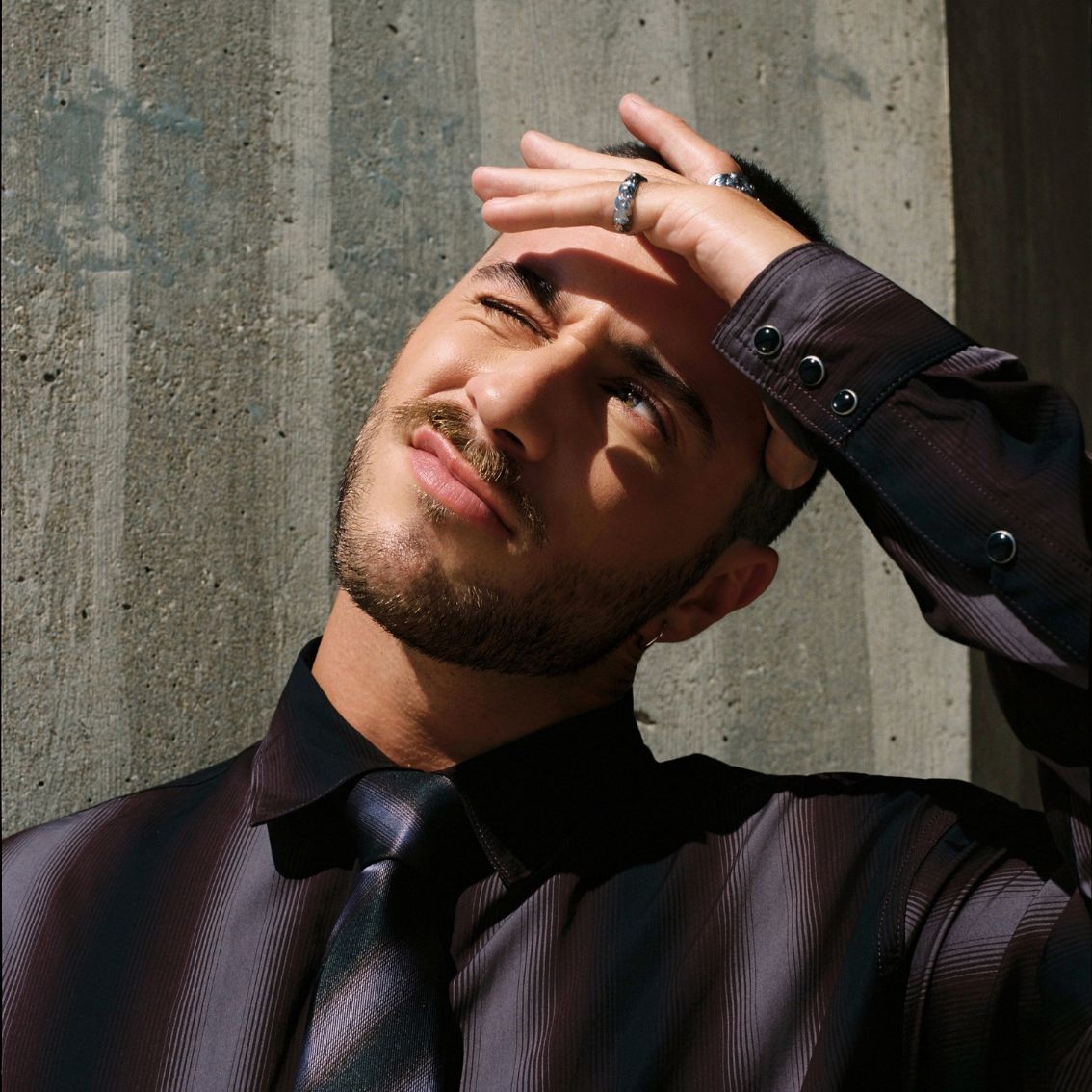
A physique worthy of Adonis, a familiar manner about him, the mindset of a captain. At 29, Ruben Dias approaches football as if savouring the final days of the rest of his life. He has a plan, but until he puts it into action, he continues to weigh up scenarios, consider alternatives and enjoying. The interview took place before the World Cup, but he spoke of a future beyond it. He is going through changes that go beyond the cycle of wins and losses.
Ruben Dias’s arrival at Manchester City coincided with the club’s magical years: they were English champions four times in a row and reached two Champions League finals, winning the second. The last two years, however, have been difficult: last season, he was sidelined by injury for a total of 87 days, having already been forced to sit out 83 days the season before. Significantly, these were two years in which he won no major titles, apart from the League Cup and the FA Cup, and the Nations League, which he won with Portugal.
Like his club, Ruben Dias is going through a period of transition. Guardiola left after ten years as manager; Bernardo Silva, who spent nine seasons at the club, also left, having passed the captain’s armband on to him. With the national team, Jesus replaced Martínez. On the morning of the interview, at the Torel Palace hotel, on top of the Santana hill, in Lisbon, social media was in turmoil, with news and gossip about the end of his relationship with his girlfriend. Enjoying a few days’ holiday before joining the national team’s training camp ahead of the World Cup, he appeared as serene as a Buddha contemplating eternity.
Despite having the physique of an Adonis, his familiar manner is striking, as though the people around him were part of the neighbourhood. He is quick to respond, but may find himself rehearsing the same sentence with different words until he feels he has conveyed his thought satisfactorily. His manner of communication seems to blend spontaneity and thoughtfulness. At 29, Ruben Dias is used to anticipate. He plans what he does, but he is well aware that the secret lies in adapting to the unexpected.
Which would you prefer: answering a question about football and the rest about life, or answering a question about life and the rest about football?
A question about football and the rest about life.
You were injured during the interview you gave to the tv show Soltinhos pelo Mundo. It gives the impression that you lead the life of an astronaut.
Different players will have different approaches to what they feel they need and what helps them recover in the best possible way. With the season underway, and knowing the World Cup was coming up, I was obsessed with my recovery. I trained more than once every day. That was probably the time when I was most careful about my diet. Isolation comes as a result of training in the morning, training in the afternoon and needing to rest, because the next day you’ll be doing it all over again, week after week. All to achieve the best possible performance. If the injury hadn’t happened, I wouldn’t have had a break. I saw the recovery as an opportunity to raise my physical level. Any physiologist will tell you that you reach peak fitness and then, gradually, your form declines over the course of the season. The break is an opportunity to get back to that peak. I tend to see what happens to me as an opportunity, as a positive moment to try something new. And that’s how it was.
You seem to combine military discipline with the seclusion of monks in religious orders. Despite the fame, it’s not a worldly life. It must be difficult when you’re young.
I have an enormous curiosity to see the world. I’ll only satisfy that curiosity when I’ve finished my career and go round the world until I feel I have to come home. With that in mind, I gladly gave up my teenage years. I don’t regret a thing; I’m very happy about it, about being so focused on my dream. I didn’t have a normal teenage life; I didn’t go out at night, I didn’t make that many friends at school – or at least I didn’t nurture my friendships as much as I should have – I was obsessed with my ambition. I don’t regret it, but it meant that, later in life, I came to value friendship all the more. It meant I was able to enjoy holidays later in life. The first time I went on holiday abroad was during my first season at City. I was already 23 or thereabouts. It sounds crazy, but I don’t regret it; I’m very happy with how things have turned out in my life. Everything came later for me – girls, learning to value friendship. That was the pace I found to make my dream come true. As for day-to-day life, I like to keep things normal, whatever it may be. I like to prove to myself that I can do everything a normal person would do, travelling on a TAP or Ryanair flight, going to the supermarket or the cinema; I like to challenge myself to do these things.
There are times when, because of my routine, I have little or no time to do these things. But I enjoy it; whenever the chance arises, it makes me feel good. It makes me feel that I’m no different from anyone else. Life’s happiness lies in the simplest things; sometimes we might fail to appreciate them, but time doesn’t lie and it’s very easy to see that. In that sense, I’ve found a balance that gives me peace.
This attempt to lead a life just like everyone else’s, it worka better in Portugal or when you’re in Manchester?
I don’t see any difference. Most of the interactions I have with people who recognise me in the street are respectful. Yesterday, I was at home; I grabbed a towel and went to Fonte da Telha beach with my dad. We stayed there, on the sand. At first I felt a lot of stares, but people kept to themselves, as if to say ‘let him enjoy his moment’. A girl came up to me and said: “I hope I’m not starting a trend of people asking for photos, I just want to say that I really like your work and that I admire you a lot.” This sort of interaction is brilliant. There’s no greater privilege than being loved for what we do for a living, for what we’re passionate about, our talent. It’s someone making a comment full of love for my profession and respect for my dedication to it. Even if, after she came over, eight other people followed suit.
When you approach a girl you’re attracted to, do you get butterflies in your stomach too?
That’s bound to happen. It would be very arrogant to think that stops just because you’re famous. I feel confident because of who I am, not so much because I know she’ll recognise me. I feel confident because of the values I stand for, and the upbringing my family gave me. Sometimes that backfires, though, because I’m seen as the typical footballer – a womaniser. In many situations, it actually works against me if I want to meet a woman I respect intellectually and find attractive… the battle of my life is to prove that there are exceptions to the rule.
Do you really want to get involved in a serious relationship?
Just like anyone else.
Club Officials used to persuade players at the start of their careers to get married.
I have my own life story to prove the opposite. In my first year, I was in a relationship, and when we split up, this preconception arose that things would be different: “He did this because he now wants to enjoy life.” It had nothing to do with that. It was about judging the relationship had a future and making a decision. I’d made my way from Benfica, I’d joined City, I’d had an unforgettable first season and I was in a relationship. I believe that love takes us to a higher level. When it ended, [I wondered] how would I feel physically, emotionally and in sporting terms? And then I had a brilliant season. I won the treble [league title, FA Cup and Champions League], it was one of the best seasons I’ve ever had.
When you arrived, you also won the league title. You even won the Premier League Player of the Season.
Without a doubt, without a doubt, and I reached the Champions League final; even so, on a personal level, it was important what I did during that year, when we won the treble.
Do you think about having a family?
Yes, definitely. I’d really like to. I’m a firm believer in the power of a close-knit family because I was brought up in one – my parents are still together.
What role did they play in your career?
I’ve lived with them my whole life. I only left home when I went to Manchester. If that hadn’t happened, I’d probably still be living with them. I have a flat, but I like being with them; I get a good vibe at home. My parents’ biggest contribution was being good advisers and dedicating time to their children. Being a good adviser means saying the right things most of the time, but still saying some wrong things now and then, so that we can learn to make our own decisions. My dad taught me not to think it’s always someone else’s fault and never mine. He taught me to look at myself first and to assume that, if things go wrong, it’s me who’s done something wrong… what’s the word for ‘accountability’? To take responsibility for everything I do and not pass the buck to others. My father was the voice I heard most often – no, he was the loudest voice – no, that’s not quite right either. My mother communicated more through actions and behaviour, whilst my father did so through words. Above all, I’d highlight the positivity he instilled in me: recognising both the good and the bad, and making things better through positive thinking.
Do you do things together with your parents?
Lots of things. We share adventures. When we go to Ibiza, we go out together and, if we need to, we stay up until 8 am enjoying the moment, without any inhibitions, out of pure joy and family love.
So, to you holiday means being with your family?
Time has also taught me that it’s important to have moments apart – to be alone with my brother, with my friends – but it’s important the feel of being at home with my parents.
Don’t you set aside part of your holiday to go to places you’ve never been to meet new people?
As long as my career is ongoing, I think I’ll always feel restricted. I’m incredibly curious to go somewhere completely new and experience a different way of life. But when I have a week off, I prefer to come to Lisbon, to be with my family, with the people who fill my heart, to eat my mum’s cooking, to relax, train a bit and keep fit. Would I like to have an adventure? Yes, I do have that curiosity, but whilst my career is still ongoing, even though I’d love to go somewhere unknown, the most important thing for me – for my physical and mental health – is to be in Lisbon, with my family, at home.
Are you planning to do a trip into space, perhaps?
I’m not sure if that’s safe enough, but it can’t be far off. I’ve got a thousand and one things on my mind that I’d love to do. I’ve been wanting to go to Japan for years, but finding the time isn’t easy; I’ve been wanting to go on a safari for years; I’m incredibly curious to visit Yellowstone. I know that sometimes you have to just go without thinking too much about it, but to enjoy it the way I want to, there’s no point in rushing. Sooner or later I’ll get that chance. At the moment I’ve got a lot of ambition when it comes to sport. This week I could be anywhere else, but it’s time to be at home, to be in Lisbon, in my own country, before we embark on our World Cup adventure. After that, yes, I’ve got three weeks to do something different.
Footballers end their careers very early; they face that first ‘death’ of their lives whilst still young. Do you think about what you’ll do afterwards?
I’ve been thinking about it since I was 17 or 18. Thinking about the end of your career is part of this dream. It’s always a time when there has to be a period of mourning. I plunged into this reality, this routine of being a footballer, at the age of eight; it takes up time and limits many decisions you make in life. We get used to this routine from an early age: training, home, rest, training again, home, rest; matches every three days; adrenaline, adrenaline, adrenaline; challenges for which you have to be at the peak of your concentration and focus to perform at your best. The end of it all is going to be a shock. I’m now 29 and have a more informed view on the matter. I have many colleagues who’ve already been through this phase, and I’ve come to the conclusion that it’s by no means easy, even though – if we’re well organised – we have financial freedom and freedom of time, which is perhaps the most valuable thing of all.
There’s a saying that goes: when God wants to punish you, he gives you everything you want. Couldn’t all these possibilities be a way of driving you mad?
It’s about finding a new balance, a new routine. It’s by no means an easy transition, because our routine is intense. The mental aspect is a challenge for which most people aren’t prepared. And when [the end] comes, from what I’ve observed, there’s a moment… I don’t like the word ‘depression’, but there’s a tough moment there, of dealing with that change. The best remedy for all this is to plan ahead. It’s about having a plan. Butknowing what I’m going to do next isn’t eveb the most important thing. The most important thing is to have options.
In the future, what will you value most: status, pleasure or vocation?
I’ll be guided by passion. Nothing will appeal to me more than devoting myself to projects I love. I could make a list of things I think I’d have a vocation for and things I’d be quite good at. But more important than that is understanding the state of mind I’ll be in, what drives me, whether I’ll need to keep my adrenaline levels up – and then the options narrow down considerably. I don’t know whether I’ll be single by then or not, or whether I’ll already have a family. A lot can happen between now and then. But above all, I want something that gives me peace, something that makes me feel fulfilled, even if it’s doing absolutely nothing.
Do you consider devoting yourself to your family?
My parents have been through a lot together. They had their problems, but despite everything they decided to devote their lives to their children. Who knows if that might not be my greatest passion and calling? I like to think about all the possible ways and I like to think about these words: calling, passion, peace, freedom. I like to think about the word that will be most important in defining what comes next. One theme has come to mind: education. And it’s something that really moves me. Concerning education , I’d like, in my own small way, to make a difference. Education is almost at the heart of life itself. Having the ability to educate the next generation in the best possible way. That’s what helps us progress as a society. That’s what helps us improve as a society. That’s what makes everything make more sense.
Would you like to build schools, create scholarships?
I’m not sure if that’s the way forward. Perhaps it is; I don’t yet know what might come of it – perhaps developing an educational concept, a small catalyst for… I don’t have anything specific in mind; they’re just vague ideas. I’m very interested in education and would like to use my influence to improve it. What’s the best way to teach, to do things that foster creativity? Could it be that what I’m thinking about involves ensuring we continue to have good teachers? I don’t know.
Paula Rego once said that the place where she learnt the most was in Bartolomeu Cid dos Santos’s printmaking workshop, though he wasn’t even her teacher. The students would watch how he worked and then and then the did whatever they wanted in their own way.
That perfectly captures what I was trying to get across.
Let’s move on to the single question about football. In the interview for Soltinhos Pelo Mundo, you explain why Man City has become more important than Benfica. Some Benfica fans were offended. Would you like to clarify?
As a professional, I will always dedicate myself heart and soul to the club I represent. I’ve been a Benfica supporter for as long as I can remember; my father is a die-hard Benfica supporter – he always has been – and I was brought up in that environment. I think I’ve always been a very level-headed Benfica supporter. I became even more level-headed when becoming a footballer became my profession. To be good at what I wanted to be, I had to find a balance. The day my emotions take control of my decision-making, I’ll be undermining my effectiveness as a professional. My love for Benfica hasn’t gone anywhere; it will always be there – it’s part of me and who I am. I owe a great deal of who I am to Benfica; I joined the club at the age of twelve and spent twelve years there. At that age, you develop as a man, as a person. What you have at home, your surroundings and your friends also have an influence, but Benfica played a hugely important role. And when I say Benfica, I mean the people I worked with, colleagues with whom I shared unique experiences. By showing that I am 100 per cent loyal to the club I represent, I am expressing who I am and who I was when I was at Benfica. Does that make me forget my roots? Never. I know very well who helped me, who influenced me for better or for worse, even though I’ve learnt from both.
I was counting the number of players called up for the World Cup who came through the Benfica youth system. There were nine. What was the secret to this success?
As far as my training experience at Benfica is concerned, it doesn’t get better than taht. There may be others that are just as good, but in terms of what a young person needs to develop as a man and as an athlete, you couldn’t ask for more.
But what happens there to make such an impact?
Benfica set up the academy in 2006; perhaps we’re now reaping the rewards of all that planning, of turning it into a high-performance centre for developing athletes and individuals. Now, once you’re there, it depends on each person’s character, on their outlook on life. It’s not just because you have the best facilities in the world that you’ll become a good player or a good person. It depends a great deal on the role models you have at home, on the influences you allow to surround you. It depends on so many things. I didn’t always have the best coaches at every level. I’ve had some incredible coaches tactically, and there are also excellent people with huge hearts. But it’s not just about having the best coach. Sometimes, we need a bad coach to learn what not to do and to recognise the good ones. Then there’s also the quality of the scout: when you’re watching a player, you have to look at their technical ability, you have to look at their physical ability, but you have to see what’s inside them. When they saw me playing for Estrela da Amadora, one of the things they highlighted most was the spirit they sensed in me, my personality. That ends up being the deciding factor. You can have the best technical ability, the best physical ability, but if your head isn’t in the right place, you won’t get there. My brother was very important. I was going through this experience of being in a place where you couldn’t ask for more to achieve success, but my brother was in a completely different situation. That helped me appreciate even more what I had.
Does your brother (Ivan Dias) still play?
No. He came with me to England in my first year, and then he stopped playing. He spent most of his youth career at Casa Pia. Later on, he was at Casa Pia with Rúben Amorim, when they were promoted to the second division. He also played for Belenenses and Oriental. He has great memories of Oriental. He was always a role model for me – in terms of dedication and passion for what he did. We shared so many things. It was a privilege to be part of the same routine, to live the same dream, even if in different circumstances.
You live his alternative life and he lives yours.
Almost, almost. We learnt to appreciate both sides and to find a balance in those differences. At Benfica, once you reached a certain age, you’d start working out in the gym and looking after your nutrition. My brother didn’t have access to any of that. I had teammates who couldn’t be bothered with it, who scoffed at conversations with the nutritionist, and didn’t even realise what a privilege it was to have someone teaching them how to look after their bodies. Having my brother in a completely different environment gave me a another perspective.
_Top Esquire
.png)
.jpg)
 By Rui Catalão
All articles
_Top Esquire

Carlos Félix: “Todos nós somos um universo único de coisas e este é o meu”
09 Oct 2026